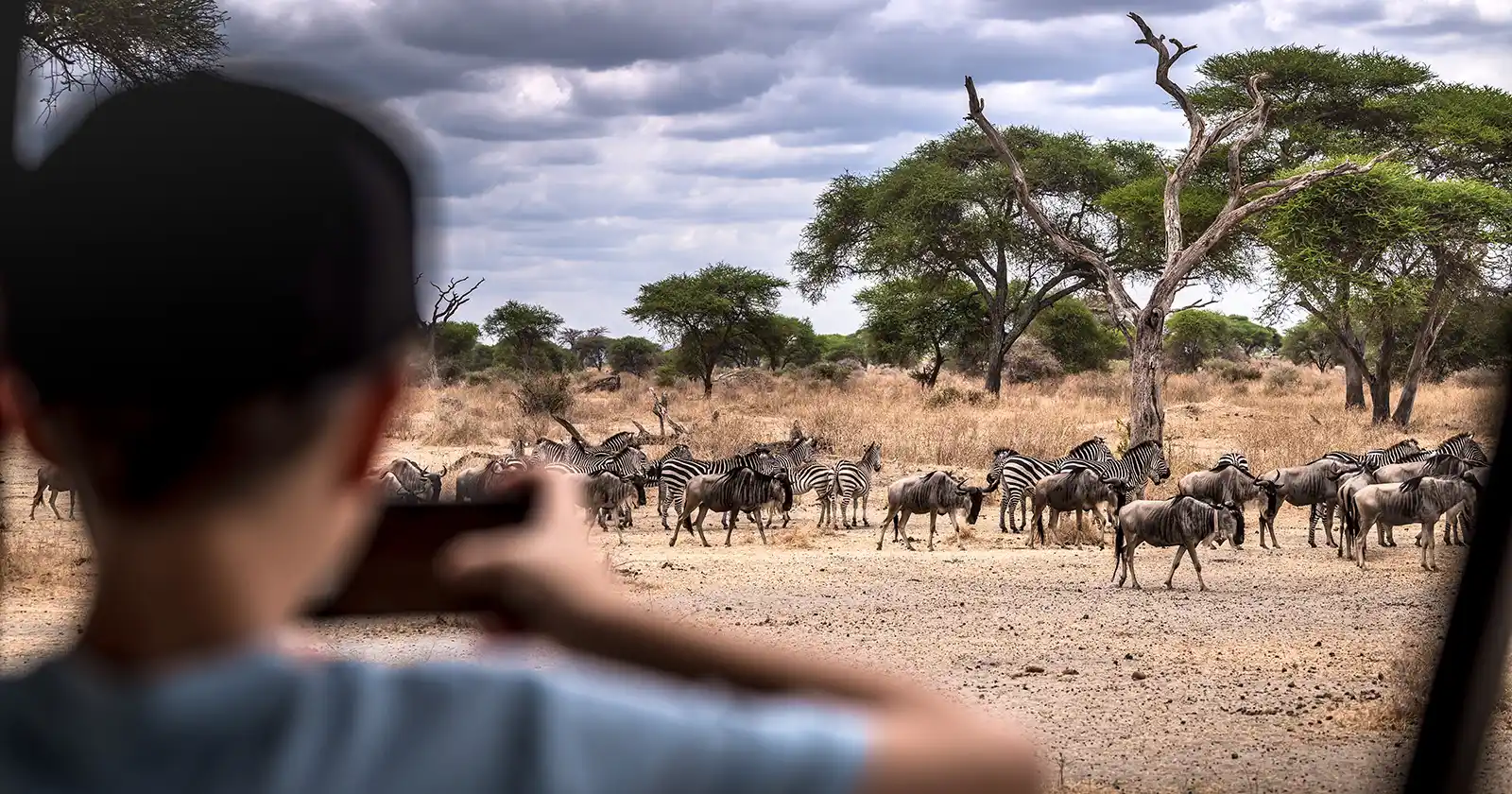
Everyone told us that a safari with children needs at least ten days and a visit to the Serengeti. We had six days in total, two children and a beach holiday in Zanzibar already booked. So we decided to do a shorter safari instead. And honestly? It worked even better than I expected.
This is the exact route we took with Still Waters Safaris in October 2026: three national parks, two lodges and one very happy family.
In this guide, I’ll share exactly where we went, how we organised our days, what worked well, and what I’d do differently if we went again. I’ll also explain how you can add the Serengeti to your itinerary if you have a few extra days.
But first, let’s talk about choosing your safari company.
Arusha is packed with safari operators. With thousands of companies offering everything from short game drives to multi-day private safaris, knowing who to trust and which one is right for your family can feel pretty overwhelming.
This was part of the reason why we decided to write this guide, to share our experience and to help you plan your own safari adventure!
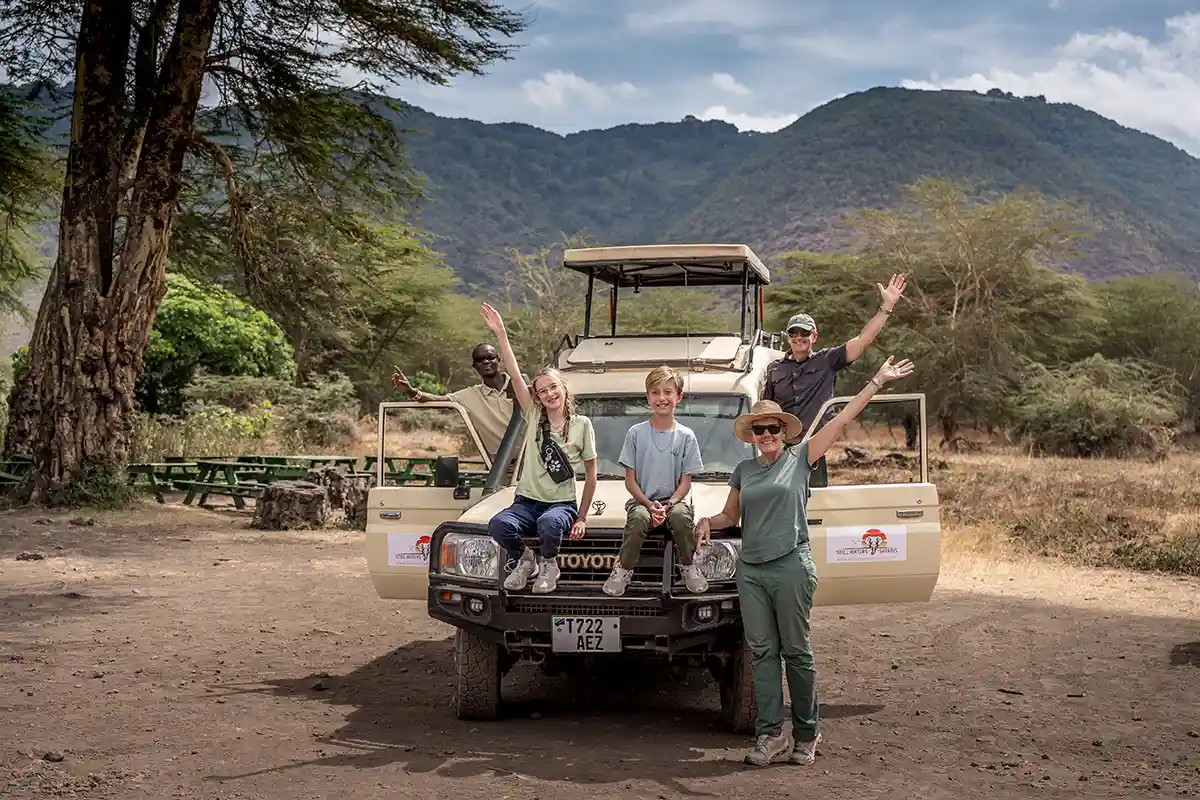
We booked our safari through Still Waters Safaris, an independently owned local company run by Tanzanian women. We had an amazing experience throughout our safari planning process and our stay at the parks and would love to recommend their services to anyone!
Plus, here’s a special offer for you if you’re planning to book through Still Waters Safaris: just click on our booking link and use the promo code PACKEDAGAIN100 to get USD 100 off each person!
Our Tanzania safari with kids at a glance
| Day | What we did | Overnight |
|---|---|---|
| 1 | Fly Zanzibar → Arusha | Ndani House, Arusha |
| 2 | Tarangire National Park | Ngorongoro Farm House, Karatu |
| 3 | Ngorongoro Crater | Ngorongoro Farm House, Karatu |
| 4 | Lake Manyara National Park + Maasai village | Ndani House, Arusha |
| 5 | Materuni Waterfalls & coffee tour | Ndani House, Arusha |
| 6 | Fly Arusha → Zanzibar | – |
The itinerary I’d recommend if we went again
Why do I think this version works better for families?
For me, it’s mainly about having more time in Tarangire National Park. I think a sundowner is one of those experiences you shouldn’t miss on an African safari, especially when you can enjoy it while watching wildlife in the distance. Unfortunately, we missed out on that this time.
Tarangire Safari Lodge has a beautiful terrace overlooking the valley, where you can sit back and watch wildlife below. The kids also get some time to enjoy the pool rather than spending more hours in the car. It’s a much more relaxed way to end the first day, and I think it makes a big difference when travelling with children.
| Day | Where | Overnight |
|---|---|---|
| 1 | Fly into Arusha | Ndani House, Arusha |
| 2 | Tarangire National Park | Tarangire Safari Lodge |
| 3 | Morning game drive in Tarangire, afternoon drive to Karatu | Ngorongoro Farm House, Karatu |
| 4 | Ngorongoro Crater | Ngorongoro Farm House, Karatu |
| 5 | Lake Manyara + Maasai village on the way back | Ndani House, Arusha |
| 6 | Fly Arusha → Zanzibar | – |
Flying in from Zanzibar or Europe? Check my Tanzania and Zanzibar entry requirements guide for visas, the yellow fever certificate and what you need at the airport.
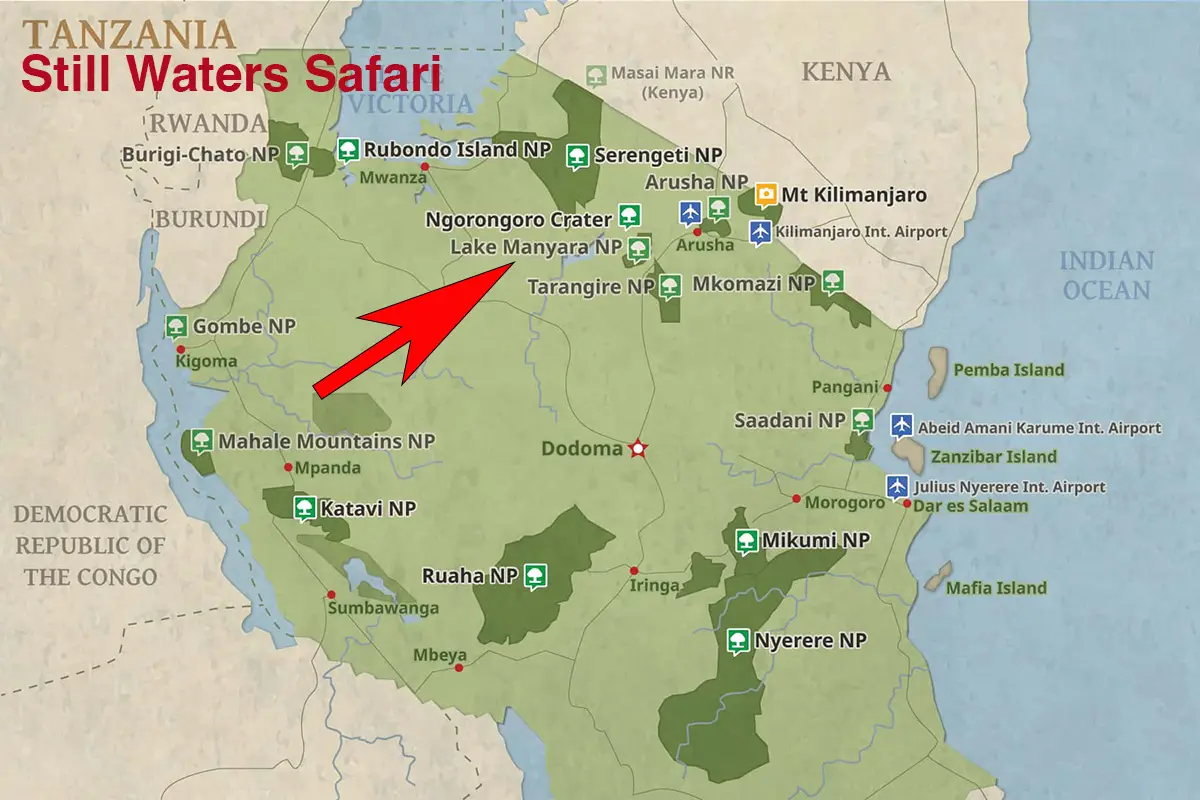
Getting from Zanzibar to Arusha
We flew into Zanzibar because flights from Europe were considerably cheaper than flying direct to Kilimanjaro International Airport (JRO) or Arusha Airport (ARK). As we’d already booked our Zanzibar stay, adding a return domestic flight Zanzibar–Arusha–Zanzibar made sense. You could also fly into Dar es Salaam and connect to Arusha if that suits your flights better.
The flight from Zanzibar (ZNZ) to Arusha (ARK) takes roughly 1 hour 15 minutes direct, longer if your plane stops at Kilimanjaro (JRO) on the way. Several local airlines fly it daily.
Two things nobody tells you:
- Luggage limits are strict. Smaller domestic airlines often have a luggage limit of around 15 kg per person, usually in a soft-sided bag. So it’s worth checking your allowance before you start packing. But don’t worry, you really don’t need to bring much for a safari! You’ll find yourself wearing the same comfortable favourites most days, and there’s no need to pack a different outfit for every game drive. Keep it simple, pack light and save a little space for those safari memories!
- Book the morning flight. You land in time for lunch, settle in, and the kids aren’t shattered for day two.
Day 1: Arrive in Arusha
Our driver-guide Frank met us at the airport and we went straight to Ndani House, a small guesthouse on the quiet edge of Arusha, only 10 minutes from the airport. Brick walls, big windows, a garden with a pool and, on clear days, Mount Meru behind it. After the rather long trip it was exactly what we needed.
Don’t plan anything big today. Arusha is a busy, noisy city and the safari starts properly tomorrow. Use the afternoon for a swim, a briefing with your guide and an early night.
Where to stay in Arusha
If any of our recommendations are not suitable for you check other places to stay in Arusha.
- Ndani House – perfect for us because it’s so close to the airport, and our two-bedroom family room was huge. We booked with breakfast, which was delicious and plentiful. Check prices at Ndani House
- Arusha Coffee Lodge (Elewana) – the splurge. Plantation houses inside a working coffee estate, right by the airport. Check prices and availability
- Gran Meliá Arusha – a big hotel with a pool and mountain views, good if you want space and facilities. Check prices & reviews
If any of these places are unavailable, browse the map below. Arusha offers plenty of accommodation options to suit different budgets.
Things to do in Arusha if you arrive in the morning
- Arusha Coffee Lodge – even if you’re not staying, you can do a short bean-to-cup coffee tour, walk through the coffee rows or have lunch on the open-air deck.
- Cultural Heritage Centre – a huge drum-shaped building packed with African art, carvings and tanzanite jewellery. Walking through the main galleries is free. For more information check the tour operators.
- Arusha city centre – see the Clock Tower roundabout, grab a speciality coffee at Coffee Culture and browse the central market and Maasai market for crafts, beadwork and spices. You can book this tour online.
Short on time? Ask your driver to go straight to Tarangire and spend your first night at Tarangire Safari Lodge. It only works if you land early, though.


Day 2: Tarangire National Park with kids
If there’s one thing my kids were really hoping to see on our Tanzanian safari, it was elephants. And Tarangire certainly didn’t disappoint! During the dry season (roughly June to October), the Tarangire River becomes one of the few reliable water sources in the area. This attracts all sorts of wildlife, including some incredible herds of elephants.
Add the enormous baobab trees to the landscape and you get that picture-perfect African safari feeling we had all been dreaming of.
Tarangire with kids – my tips
- Go for a full day rather than a quick in-and-out. Or even better stay the night.
- Have lunch at Tarangire Safari Lodge. The terrace view over the valley is worth it alone.
- Bring binoculars for each child. It ends the “my turn” fights.
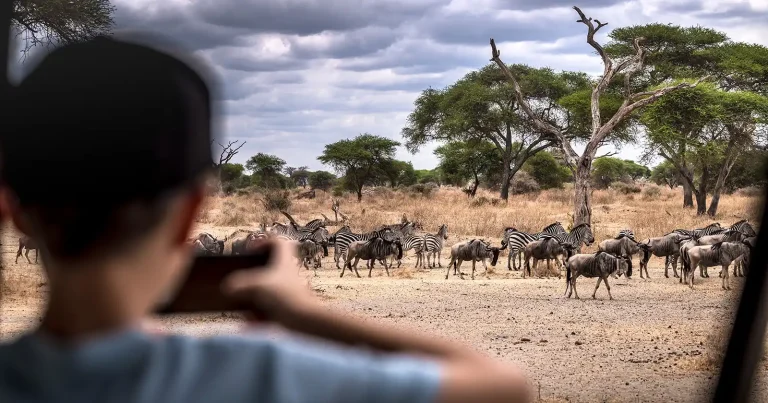
- Let them be the photographer. If you have a spare phone or camera, hand it over. Ours loved taking photos and looking through them in the evening.
- Tsetse flies can be a nuisance in Tarangire. We didn’t have any problems, but avoid dark blue and black clothes and pack repellent just in case.
In the late afternoon we drove on to Karatu, in the green highlands between Lake Manyara and the Ngorongoro Crater.


What I’d do differently: stay at Tarangire Safari Lodge
Stay the night at Tarangire Safari Lodge. It’s beautiful, and its terrace overlooking the Tarangire River valley is the perfect spot for a sundowner with wildlife below. There’s a pool, which is always a plus with kids, although the water was quite cold. Staying in the park also gives you an extra early-morning game drive. Ask Still Waters Safari to send you an offer to stay here.
Where we stayed: Ngorongoro Farm House, Karatu
The Ngorongoro Farm house is a lodge on a working coffee farm just outside Karatu, about half an hour’s drive from the Ngorongoro Conservation Area gate. The cottages are spread through big gardens, there’s a pool, and much of the food comes from the farm itself. Sunsets come with the Oldeani volcano in the background.
Why it works for families: family rooms, space to run around, and you’re perfectly placed between Lake Manyara and the crater. One honest note: it’s a big property, and some cottages are a five-minute walk from the main building. Ask for one close by.
Check prices at Ngorongoro Farm House directly with Still Waters Safari


Day 3: Ngorongoro Crater with kids
The Ngorongoro Crater was one of the places I was most looking forward to visiting on our safari. I had heard so many stories about its incredible wildlife and the chance to see animals you don’t easily spot elsewhere. So, naturally, we were all pretty excited as we set off that morning, wondering what the day would bring.
The drive up through the forest was quite something. It was misty, with fog hanging between the trees, and when we reached the viewpoint at the crater rim, we could hardly see a thing! Frank, our driver, reassured us that we would stop again on our way out at the end of the day, by which time the fog should have cleared. He also told us that from May to July, the fog can sometimes get so thick that you can barely see the vehicle in front of you!
As we started our descent from the crater rim, the landscape slowly opened up in front of us. And wow, what a sight! The crater floor is enormous, with wide open grasslands and a landscape that feels almost endless. It’s also one of the best places in Tanzania to spot the endangered black rhino. And guess what? We saw seven of them! We could hardly believe our luck.
But that wasn’t all. We spotted two lions strolling back from the lake across the grassland, seemingly on the lookout for their next meal. In the distance, a hyena suddenly started running towards something lying in the grass, while zebras and wildebeest grazed peacefully all around us.
It was one of those classic African safari scenes you always hope to experience, and we were right in the middle of it.
How busy is Ngorongoro Crater?
I won’t pretend we had the place to ourselves. Far from it! The crater floor was pretty busy, with safari vehicles gathering around wildlife sightings. I suppose that’s part of visiting such a famous and wildlife-rich destination.
Still, I did find myself wondering whether a daily limit on the number of vehicles allowed into the crater might help preserve the experience for everyone, as well as protect this very special environment.
How long does it take to get into the crater?
From Ngorongoro Farm House it’s about 30 minutes to the conservation area gate, then roughly another hour along the crater road before you’re down on the crater floor. Count on around 1 hour 15 minutes in total.
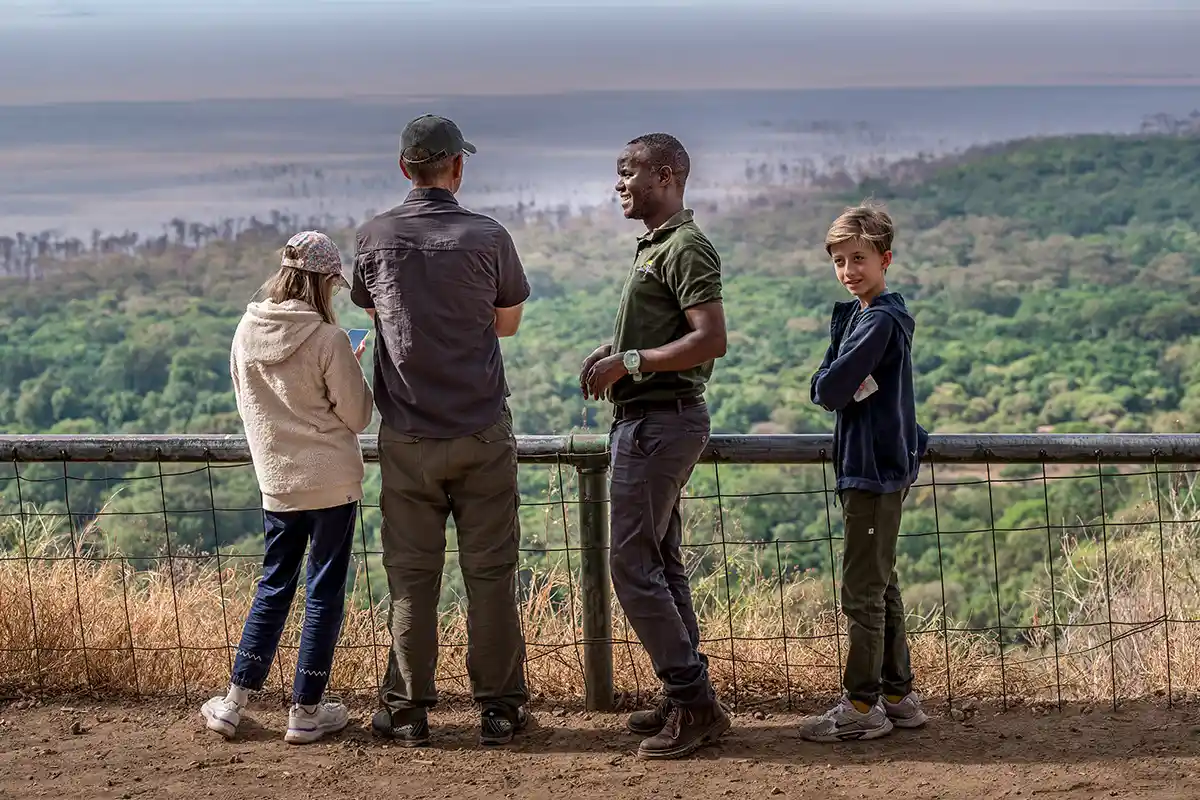
Tip: save the viewpoint for the way out. There’s a viewpoint on the rim on the way in, but on a foggy morning there’s no point stopping – you’ll see nothing but white. We drove straight on and stopped on the way out instead, once the mist had cleared. Seeing the whole crater laid out in front of us was beautiful.
Ngorongoro Crater with kids – what to know
- It’s cold on the rim in the morning. Fleeces, woolly hats and long trousers for everyone; layers come off by mid-morning.
- Toilet stops are limited. There are a couple of picnic sites with loos on the crater floor – use them.
- Bring snacks. Lunch is a picnic at a site by a lake. Watch out for black kites as we saw how they swoop for sandwiches. And succeed!
- It’s a long day, but we were back at the lodge in time to relax by the pool.
Ngorongoro fees: the crater service fee is US$295 per vehicle for the descent, on top of the daily per-person conservation fee. Fees change regularly, so check what your quote includes. Ours was included in the Still Waters Safari price.


Day 4: Lake Manyara National Park and a Maasai village
Lake Manyara was actually a last-minute addition to our original itinerary, and I’m so glad we decided to include it. It’s a much smaller park, but also much greener and completely different from Tarangire.
You start by driving through a beautiful groundwater forest, where baboons and blue monkeys seem to be everywhere. Then the trees gradually open up as you reach the lakeshore, with the impressive Rift Valley escarpment rising in the background. It’s a lovely change of scenery.
One thing worth knowing is that Lake Manyara is slowly changing. Rising water levels have already turned some areas into swamps and made certain roads inaccessible. There are concerns that more of the surrounding land could eventually be swallowed by the lake.
You’ll probably read about Lake Manyara’s famous tree-climbing lions before visiting. They do exist, but don’t promise your kids that you’ll see one! Sightings are rare, and even our driver told us he had never spotted one himself.
But honestly, even without seeing a lion, we absolutely loved this park. It was much quieter than the others, with only a handful of safari vehicles around, and the lush vegetation made it feel very different from the open landscapes we’d experienced before.
We still spotted elephants, plenty of monkeys, impalas, waterbucks, giraffes and hippos, to name just a few.
As the park is relatively compact, Lake Manyara also works really well as a half-day safari before heading back to Arusha. For us, it was a lovely final addition to an already incredible safari.
Adding the Serengeti? You’d skip Lake Manyara and drive from the crater into the Serengeti on day 3 instead – see below under adding Serengeti.


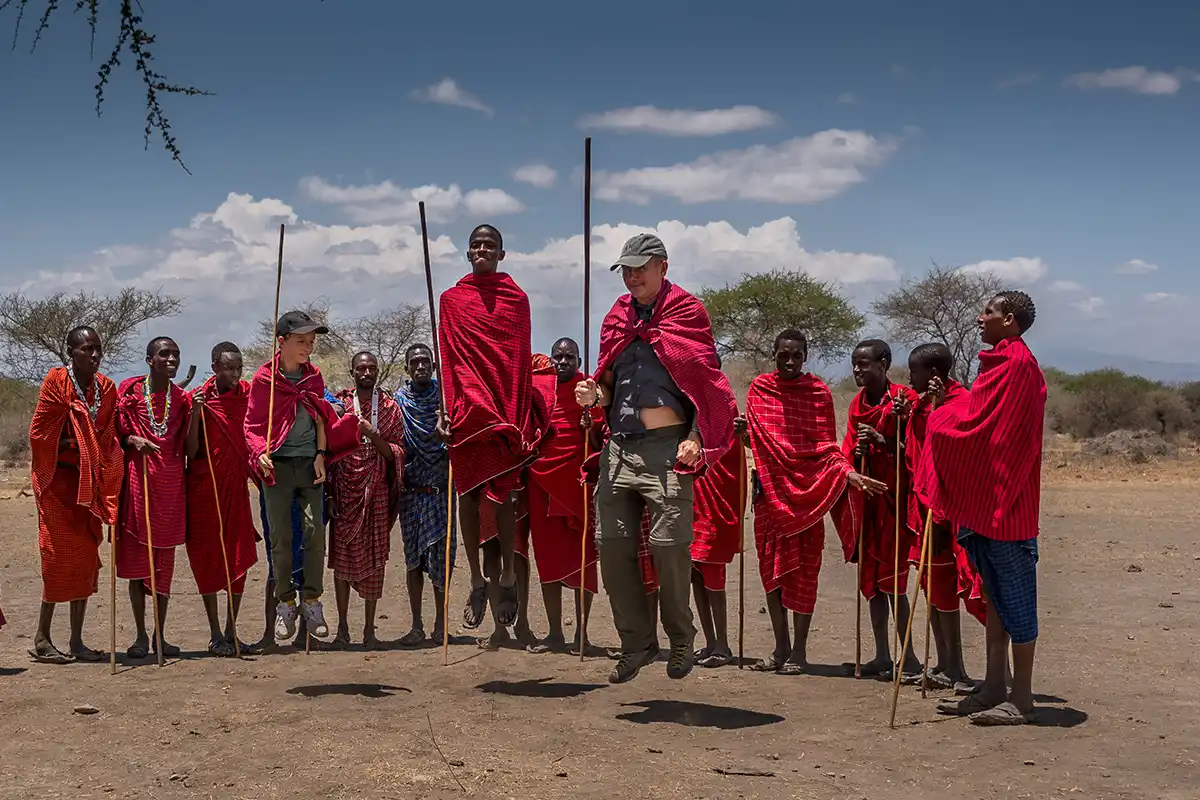
Don’t skip a Maasai village visit
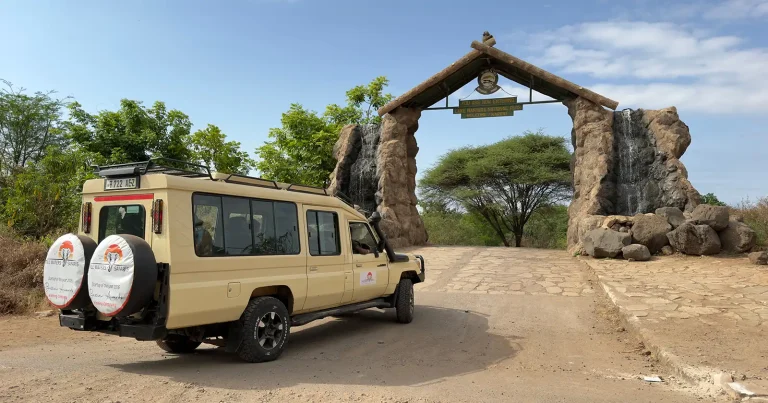
On the way back to Arusha, our driver suggested stopping at a Maasai village. Don’t skip it. Depending on the village, you pay around US$30–50 and it takes about an hour.
The visit includes some dancing and a walk around the clay-and-straw houses, where families also keep their animals at night. You can buy crafts and souvenirs, and this is the place to do it, as the money goes directly to the community.
Fun fact: the Maasai really do dress the way you see in photos – it isn’t a costume for tourists. As soon as you arrive in Arusha you’ll see them everywhere, in red or blue shukas, with their sticks and their herds.
That night we checked back into Ndani House for two nights.


Day 5: Materuni Waterfalls and coffee tour
After four days in a Land Cruiser, a day on foot sounded perfect. Materuni is a Chagga village on the green slopes of Kilimanjaro, about three hours’ drive from Arusha. You walk through banana and coffee plants to an 80-metre waterfall, then roast and grind your own coffee with a local family – singing included.
Honest note: it’s a stunning place. We really enjoyed the coffee tour and the hike, especially spotting several chameleons, which was a first for us. But it’s too long a day trip from Arusha. If you’re staying in Moshi or the Kilimanjaro foothills, definitely add it. Otherwise, I’d swap it for an extra night in Tarangire or one or two days in the Serengeti.
If you are in the area you can the Materuni Waterfalls and Coffee Tour book this tour also individually with Get your Guide.


Day 6: Fly back to Zanzibar
Breakfast, airport, and an hour later you’re looking at the Indian Ocean. Safari and beach in one trip – it’s a combination that’s very hard to beat with kids.
Adding the Serengeti: how to extend this safari
If you want a safari from Zanzibar that includes the Serengeti, you can absolutely do it. Here’s how I’d add it:
- Central Serengeti (Seronera) – add 2–3 days. From the Ngorongoro Crater it’s a 3–4 hour drive, and the game viewing starts as soon as you pass Naabi Hill Gate. The Seronera River area is brilliant for big cats and elephants, the classic first-timer’s Serengeti. Fly back to Arusha (or straight to Zanzibar) from Seronera airstrip rather than driving all the way back.
- Southern Serengeti (Ndutu) – add 1–2 days. Only about two hours from Ngorongoro, and brilliant in the green season, December to March, when the wildebeest herds calve on the short-grass plains.
Budget for higher park fees and the internal flight out of the Serengeti, which isn’t usually included in safari prices.
Get your quote from Still Waters Safari and if you book you get USD 100.- discount per person.
How much does a family safari in Tanzania cost?
Prices depend on season, lodges and group size. As a guide, our whole trip for the four of us, including flights to Zanzibar, came to roughly USD 10,000. It was fully private, with all meals included.
What was included: lodges, all meals, drinking water, soft drinks, one alcoholic drink per meal, park fees, a private Land Cruiser with a pop-up roof, an English-speaking guide and airport transfers.
Not included: domestic flights (including Serengeti flights), travel insurance, visas and tips.
The good thing is you can change the itinerary to suit your budget.
Booking your safari with Still Waters Safaris
We travelled with Still Waters Safaris, a family-owned, 100% Tanzanian woman-owned company based in Arusha and run by two sisters. Amanda together with her sister and her team will do their utmost to make your wishes happen. This is their home, and they’ll make sure you fall in love with Tanzania.
Packed Again readers get US$100 off per person. Get the discount and start planning your safari
Safari packing list for kids
- Neutral-coloured layers (khaki, green, beige – no dark blue or black)
- A warm fleece for the crater morning
- Sunhats and high-factor sun cream
- Binoculars – one pair per child
- Insect repellent
- A soft duffel bag for the domestic flights
- Snacks, wet wipes and a power bank
- Downloaded films or audiobooks for the drives
FAQ: Tanzania safari with kids
Do I need a visa for Tanzania?
Yes, most visitors need one. Apply for the e-visa online before you fly (USD 50, or USD 100 for US citizens). Since October 2026, you also need the mandatory Tanzania travel insurance (USD 44). Everything else is in my Tanzania and Zanzibar entry guide.
Is a 3–4 day safari enough with kids?
We had three full safari days on this trip, and for a first safari with children I’d say it’s the sweet spot. Longer trips add the Serengeti, but they also add long drives and lodge changes. With kids, fewer moves and shorter days matter more than ticking off every park.
The one thing I’d change is the start, as I mentioned above: stay at Tarangire Safari Lodge on day two. It cuts the driving that day and gives you another morning game drive in the park before heading to Ngorongoro.
What age is best for a Tanzania safari?
There’s no official minimum age for the parks. Some lodges and shared game drives set their own limits, often around five or six. On a private safari you set the pace, which is why I’d always recommend it with kids – you can stop for a loo, head back early or sit with the elephants for an hour.
Most families find eight and up the easiest age. Younger kids can absolutely do it; just keep the days shorter.
Can you do a safari from Zanzibar?
Yes. Fly from Zanzibar to Arusha (about 1 hour 15 minutes) and start your safari there. Three days is the minimum for Tarangire and Ngorongoro; five or six lets you slow down or add the Serengeti.
Is the Ngorongoro Crater suitable for kids?
Very. The animals are close and plentiful, so even young children stay interested. Just expect an early start and around 1 hour 15 minutes from Karatu to the crater floor.
Tarangire or Lake Manyara – which is better with kids?
Tarangire for big elephant herds and that classic safari look. Lake Manyara is smaller, quieter and works well as a half day. If you only have time for one, choose Tarangire.
How far is the Serengeti from the Ngorongoro Crater?
Around 3–4 hours’ drive to central Serengeti (Seronera), with game viewing along the Ngorongoro crater and again from Naabi Hill Gate onwards. Ndutu in the south is about 2 -3 hours from the Ngorongoro Crater rim.
When is the best time for a family safari in Tanzania?
The dry season, June to October, is easiest: animals gather near water and the roads are good. It also lines up with European summer and autumn holidays. For the calving season in Ndutu, go December to March.