Lausanne is one of those places that doesn’t really feel like a city. Spend 48 hours in Lausanne and you’ll see what I mean.
Yes, it is the fourth largest in Switzerland, but spend a morning here and you’ll see what I mean. It tumbles down the hillside towards Lake Geneva, the air smells of the water, and half the people you pass are in trainers heading out for a swim, a paddle or a run along the shore. There’s an easy, outdoorsy feel to the place that we didn’t expect, and it’s what made us want to slow down and stay.
The city is a perfect location to base yourself in Canton Vaud. Geneva airport is only around 40 minutes away by direct train, so you can land, hop on the train, and be settling into your hotel in no time. From there, the whole canton opens up — the lake, the vineyards and the Vaud Alps are all within easy reach.
Here’s exactly how we spent 48 hours in Lausanne with the kids, plus a few extra ideas if you can stretch your stay.
48 Hours in Lausanne at a Glance
| Day | Morning | Afternoon | Evening |
|---|---|---|---|
| Day 1 | Château de Chillon with the audio guide | Belle Époque cruise back to Lausanne, then the Olympic Museum | Dinner at Brasserie de Montbenon or Café de Grancy |
| Day 2 | Up to Glacier 3000 for the Peak Walk by Tissot | Lunch at Restaurant Botta with glacier views | Back to Lausanne — or stay the night in the mountains |
Where to stay in Lausanne
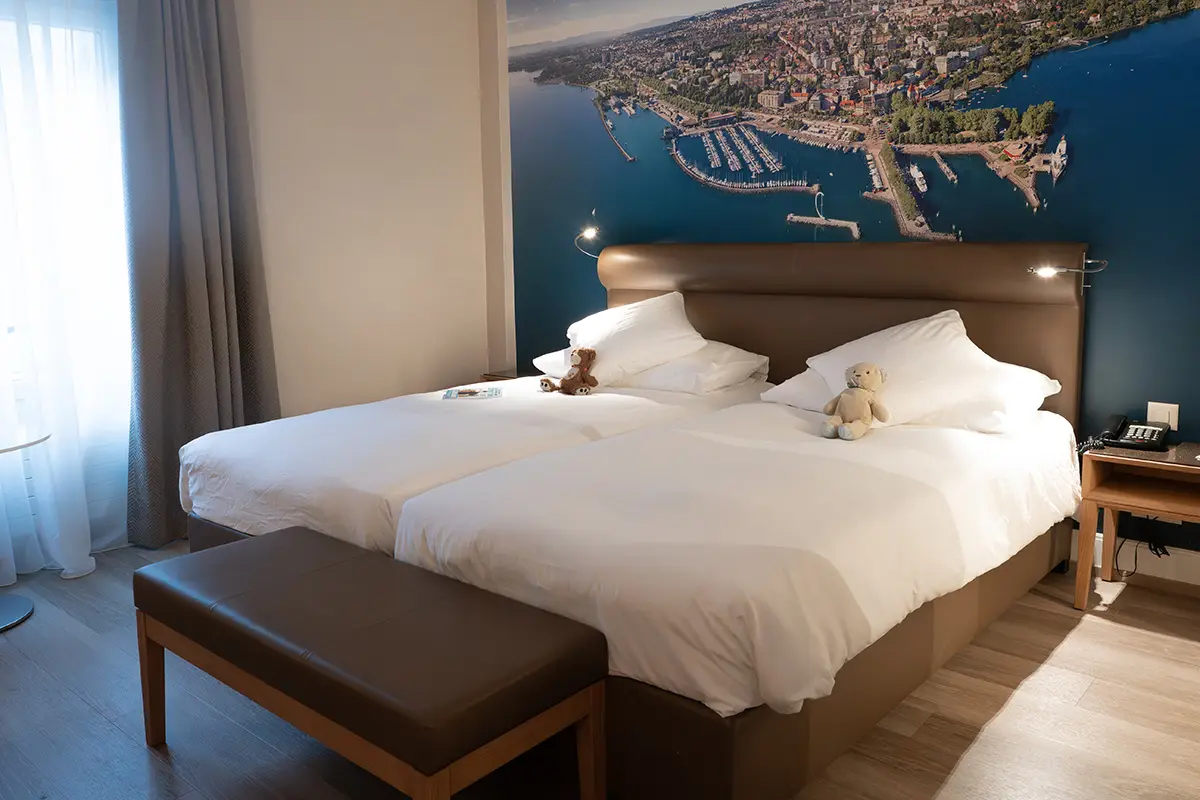
We stayed at the Hôtel de la Paix, up near the station rather than down by the water.
A quick word on that, because it matters here: Lausanne is built on a hill. The lake sits at the bottom in the Ouchy district, and the town climbs up from there. You may think it’s hard work, and on foot some of those streets genuinely are, but the little m2 metro does the climbing for you. The line runs straight up from the lake to the station and old town. So even with a hotel set back from the water you’re never far from anything. We barely thought about it after day one.
Browse the map below if our hotel suggestion is not what you’re looking for, there is plenty of accommodation in Lausanne that will fit your needs.
Day One — Castle, lake cruise and the Olympics
Morning: Château de Chillon
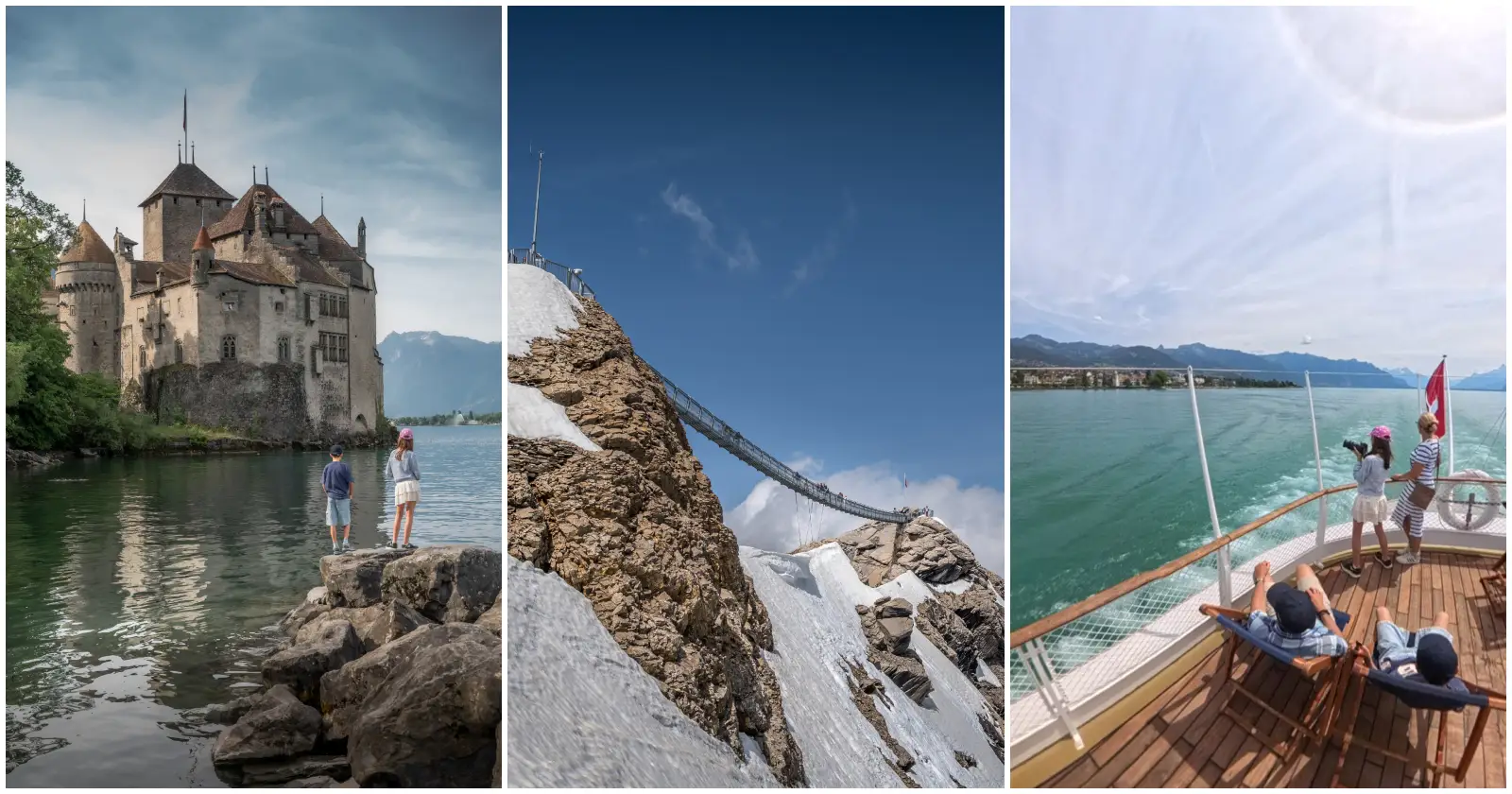
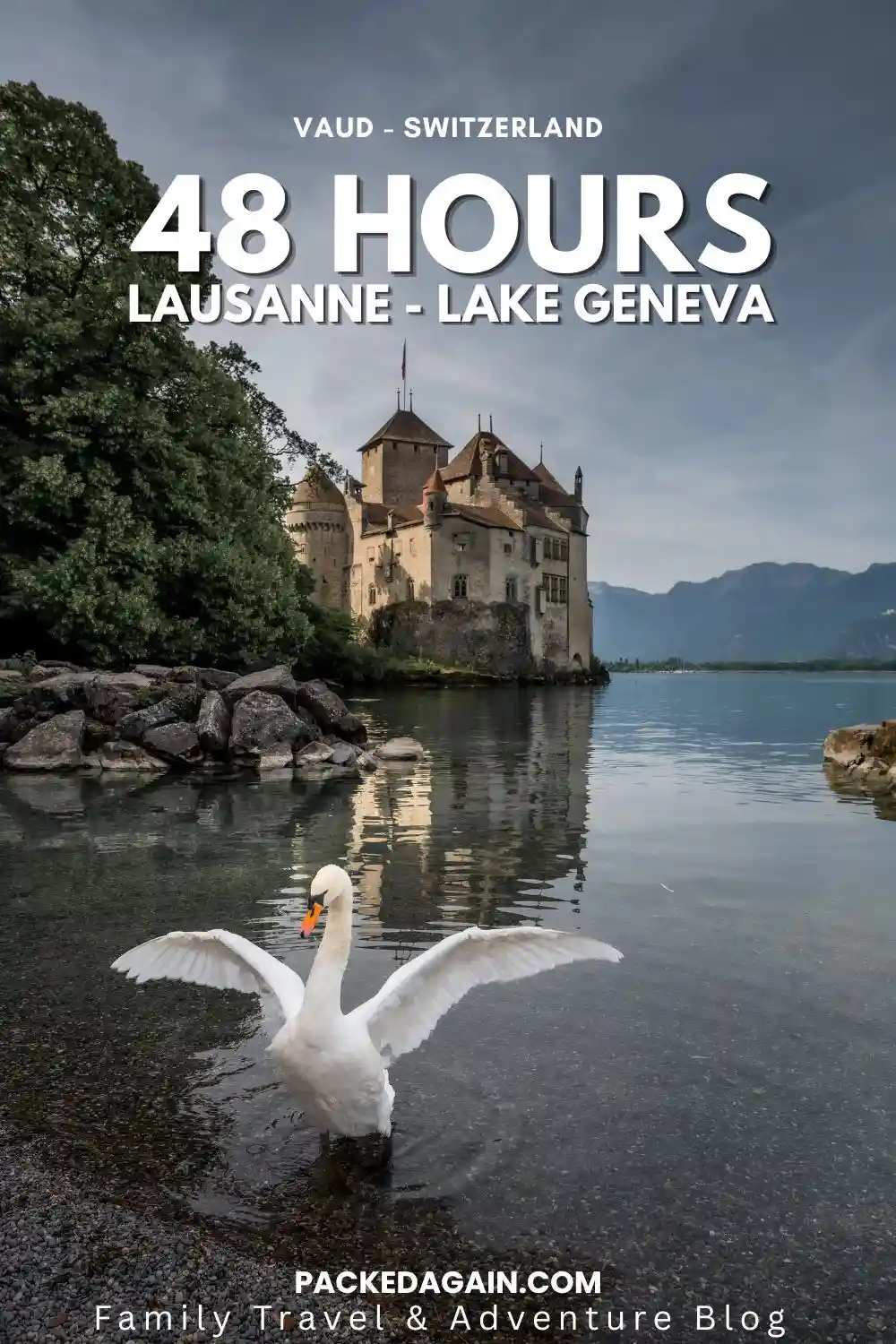
Start the day with a short train ride along the lake to Château de Chillon, near Montreux. The castle is one of the most visited historic monuments in Switzerland, and the moment you see it you understand why. A medieval castle sitting on its own little rock island, right on the water, with the mountains behind.
A bit of history for you: the castle sits on the old road between northern and southern Europe, and whoever held Chillon controlled who passed. The House of Savoy ran it from the 12th century and turned it into the fortress you see today. Its most famous prisoner was François Bonivard, chained in the dungeon for six years until the Bernese freed him in 1536 — a story Lord Byron later made famous in his poem The Prisoner of Chillon. The castle has worn a lot of hats since: Savoyard stronghold, Bernese bailiff’s residence, and now one of the country’s best-loved museums.
Get the audio guide
I can’t recommend this enough. Our kids got completely absorbed in it, wandering from the dungeons to the great halls following the story room by room. It turned what could have been “another old castle” into the highlight of their morning.
For a relaxed, no-rush visit you’ll want about two hours. Don’t dash straight off afterwards either — take a few minutes to walk around the outside of the castle and along the little stretch of beach beside it. It’s a lovely spot to let the kids stretch their legs before lunch. And for photographers, you will be rewarded with some beautiful scenes.
Lunch: Café Byron
Right by the castle you’ll find Café Byron. A great choice for lunch and well placed for what comes next. Time it so you’re finished and back down at the landing stage in good time for the boat.


Afternoon: the Belle Époque boat back to Lausanne
This is the part I’d build the whole day around. Instead of taking the train back, sail back to Lausanne on one of CGN’s Belle Époque paddle steamers.
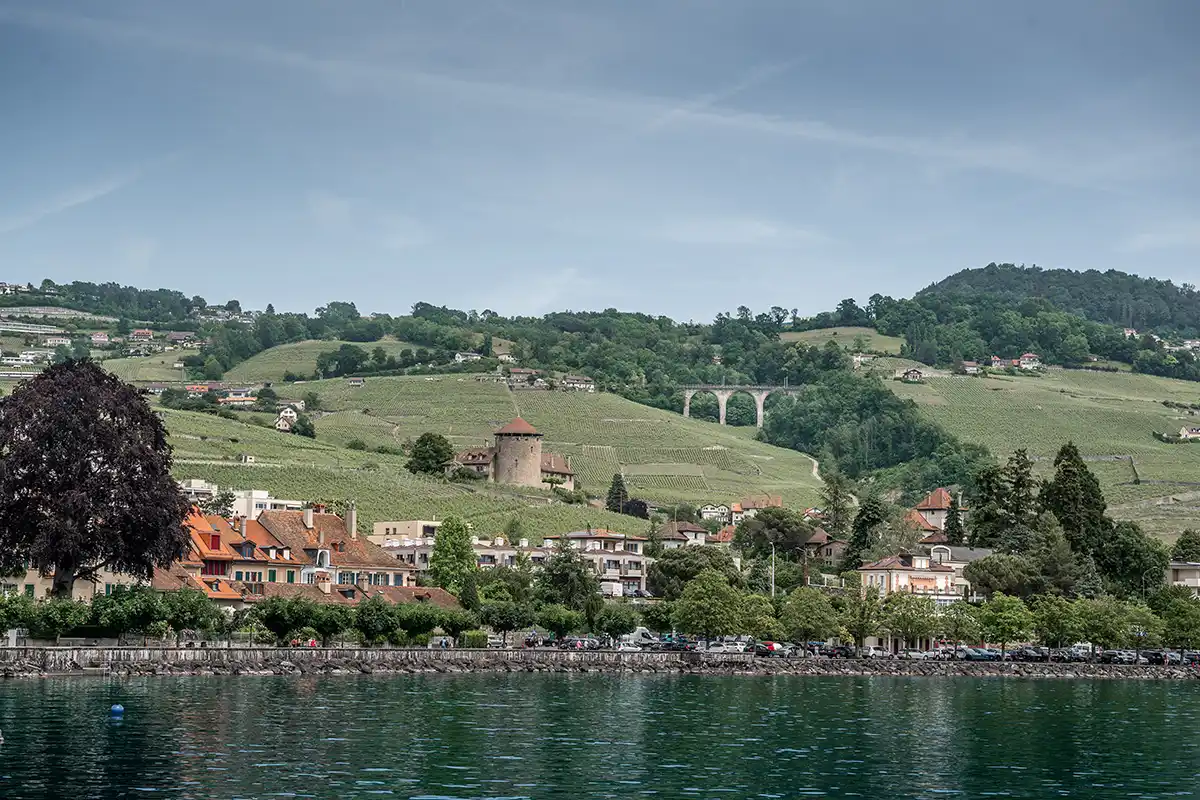
The boat leaves Château de Chillon at around 13.06 (always double-check the current CGN timetable, as sailings change with the season — the historic steamers mainly run in the warmer months). It is a 1 hour 45 minutes cruise back to Lausanne, past Montreux and the famous UNESCO terraced vineyards of Lavaux, with the lake and mountains opening up around you the whole way.
A little about these boats, because they’re special: CGN has been sailing Lake Geneva since 1873 and still runs a fleet of eight Belle Époque paddle steamers — the largest of its kind anywhere. Montreux, which is the oldest first set sail in 1904. They’re not a gimmick laid on for tourists; these boats are genuine, working part of how people get around the lake. You can eat on board, so if you’d rather skip the castle café, save your appetite and have lunch on the water instead.


Late afternoon: the Olympic Museum
If you’ve still got energy left — which honestly surprised me as the kids were practically pulling us there — the Olympic Museum (Musée Olympique) is only about a 10-minute walk from where the boat docks at Ouchy.
Lausanne has been the Olympic Capital since 1915, when Pierre de Coubertin moved the International Olympic Committee here, and the museum sits in a lovely lakeside park dotted with sculptures. Inside, it’s spread over two main levels (on level three is a restaurant) and it’s very hands-on — far more interactive than the kids and I expected, with interactive displays, real torches, medals, kit and film clips that pull you in. We’d planned on two hours for a relaxed visit. We stayed three.
And don’t miss the exhibition outside in the park. The high jump records are marked at their real heights, which is genuinely hard to believe when you stand under them. There is a proper 100m sprint track where the kids (and, fine, the adults) can time themselves against the Olympic record. A great way to burn off the last of the day’s energy before dinner.
Dinner
For your first evening, two spots we’d happily send you to:
- Brasserie de Montbenon — relaxed, within a nice park setting and some lake views.
- Café de Grancy — a popular local favourite with a buzzy, neighbourhood feel.
Either makes a good end to a full day on your feet. In peak season we recommend to make a reservation.


Day Two — A change of scenery in the Vaud Alps
After a day by the water, swap the lake for the mountains.
Morning: up to Glacier 3000
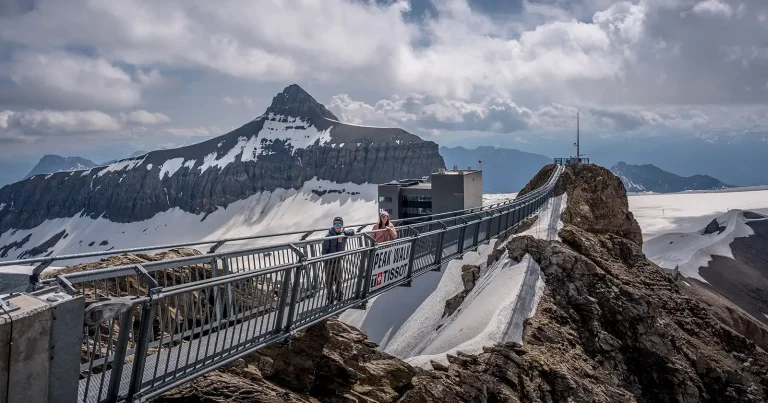
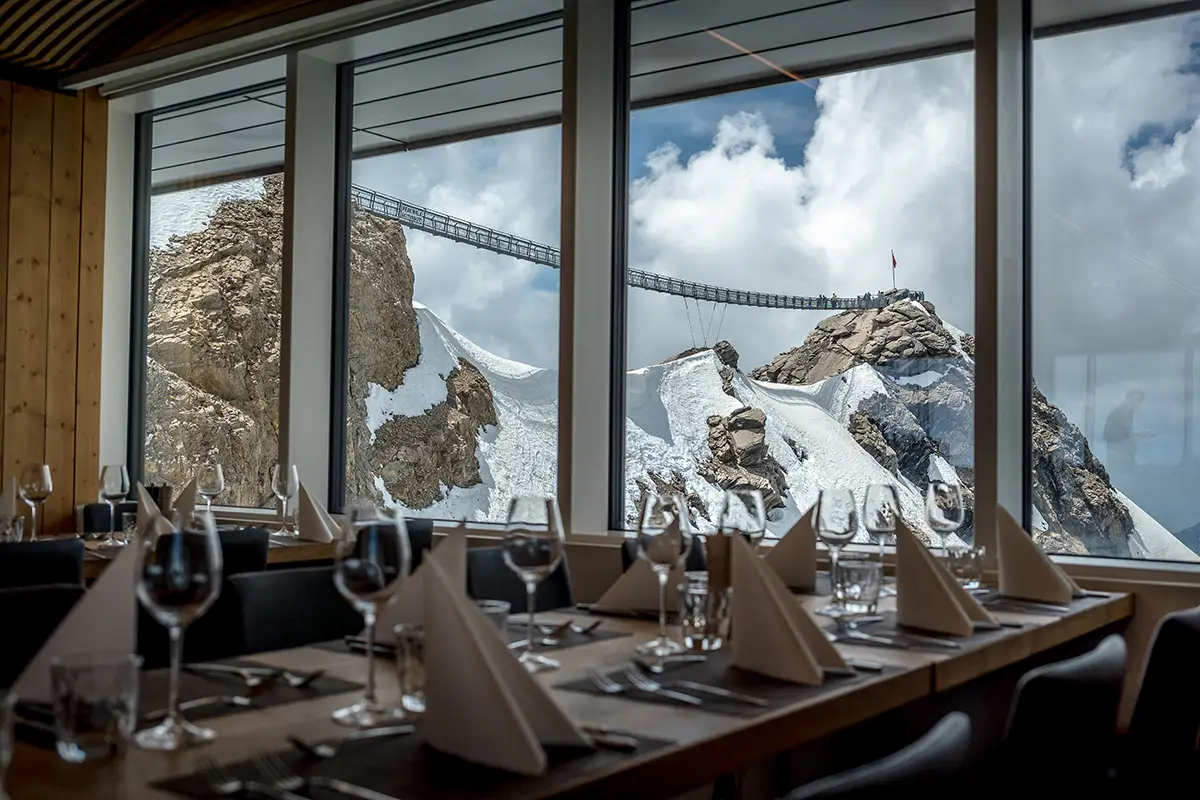
The drive takes only a little over an hour by car from Lausanne to Glacier 3000, so make it a full-day excursion. Up top you’ll find the Peak Walk by Tissot — the world’s first suspension bridge linking two summits. Add the views over what feels like the entire Alps, and there’s plenty to keep the family busy.
I have written a comprehensive blog post separately which covers all you need to know. For tickets, opening times, the cable car, the Peak Walk and everything else;
read our full guide on how to visit Glacier 3000.
Lunch: Restaurant Botta
For lunch at altitude head to Restaurant Botta at the summit station, designed by the Swiss architect Mario Botta. It’s worth a look for the building alone, and you’re eating with the whole sweep of the Alps in front of you.
Getting to Glacier 3000 by public transport
You can get to Glacier 3000 without a car, but it takes some time and organising. Take the train from Lausanne to Aigle, change onto the little mountain train from Aigle to Les Diablerets, then hop on the PostBus up to Col du Pillon, where the Glacier 3000 cable car starts. From there it’s a short, scenic ride up to Scex Rouge. Allow yourself the best part of three hours each way and check your connections on the SBB app before you set off.
A car makes this itinerary easy thanks to the short cross-region drives. Compare prices on Discover cars if you need to rent a car.
If you’re relying on public transport or visiting several mountain attractions, a Swiss Travel Pass pays for itself fast — it gives 50% off Glacier 3000 and covers most trains, buses and boats across the country. Check Swiss Travel Pass prices.
Group trip
Alternatively if you do not have a car and don’t fancy the public transport system join an organised tour. GetYour Guide offers different options and they are a perfect option. All you do is just turn up for the fun. Check prices and availablities.
Stay the night in the mountains
If the mountains win you over and you’d rather stay the night up there, The Glacier Hotel in Les Diablerets is a comfortable, kid-friendly base — and from there you could roll your trip into our 4-day Vaud Alps itinerary.


A few more Vaud highlights worth your time
Two days barely scratches the surface, so if you can spare an extra day or two, here’s what I’d add:
- Stroll the Lavaux vineyards. Canton Vaud is the second largest wine producer in Switzerland, and the terraced vineyards of Lavaux — a UNESCO World Heritage site — drop right down to the lake between Lausanne and Montreux. A gentle walk among the vines, glass of local Chasselas in hand, is reason enough to stay another day. Here’s how to walk the Lavaux wine trail.
- Ride the GoldenPass Express. One of Switzerland’s great scenic train journeys runs from nearby Montreux up into the mountains. Read about the GoldenPass Express from Montreux to Interlaken.
- Maison Cailler. Just over the cantonal border in the Gruyère region, the Cailler chocolate factory makes an easy, fun half-day trip — and the kids will thank you for it. Check prices here.
- More on the Riviera. If you’re heading Montreux way, there’s plenty more to fill a day — see our pick of things to do in Montreux.
Is 48 hours in Lausanne enough?
For the city itself and one big day trip, yes — two days gives you a proper taste without rushing. But Lausanne is such a good base for the rest of Canton Vaud that most people end up wishing they’d booked longer.
If that’s you, the lake, the vineyards and the Vaud Alps are all waiting, and they reward every extra day you give them.
48 hours in Lausanne — FAQs
Is Lausanne worth visiting?
Very much so. It’s got the lake, the old town, world-class museums and an easy, outdoorsy feel, all in a city small enough to cover on foot. It also makes a brilliant base for the rest of Canton Vaud, which is why we’d happily recommend a stay here for a few days.
How do I get from Geneva Airport to Lausanne?
It’s about a 40-minute direct train from Geneva Airport straight to Lausanne, with departures several times an hour and no need to change. You can land, grab your bags and be in the city before lunch.
Is Lausanne good for families with kids?
It’s a great family city break. The Château de Chillon audio guide kept ours hooked, the Olympic Museum is hands-on inside and out, the boat ride is an adventure in itself, and the lakeside parks give little ones room to run.
How do you get around Lausanne?
On foot, mostly — but remember the city is built on a hillside. The m2 metro runs from Ouchy on the lake up to the station and old town, so it does the steep climbing for you. You don’t need a car for the city itself.
Can you visit Glacier 3000 from Lausanne in a day?
Yes. It’s a little over an hour by car, or around three hours each way by public transport, so it works best as a full-day excursion. We’ve put all the detail in our guide to visiting Glacier 3000.
How do I get from Lausanne to Château de Chillon?
Take the train along the lake towards Montreux. It’s roughly 25 to 30 minutes to the Veytaux-Chillon stop. From there it is a short walk to the castle. If there is no direct train to Chillon, you take the train to Montreux and change to the bus to Veytaux-Chillon. To come back, do as we did and take the CGN – Belle Époque fleet instead of the train.
Note: This trip was in cooperation with Vaud Tourism, thank you again! These great collaborations are here for us to describe our experience of the area and/or activity. This way we can also detail the best there is, so you know what to expect when visiting Switzerland.
Never Forget to Explore.